

The Tragedy of Karbala: What Really Happened According to Authentic Islamic Sources
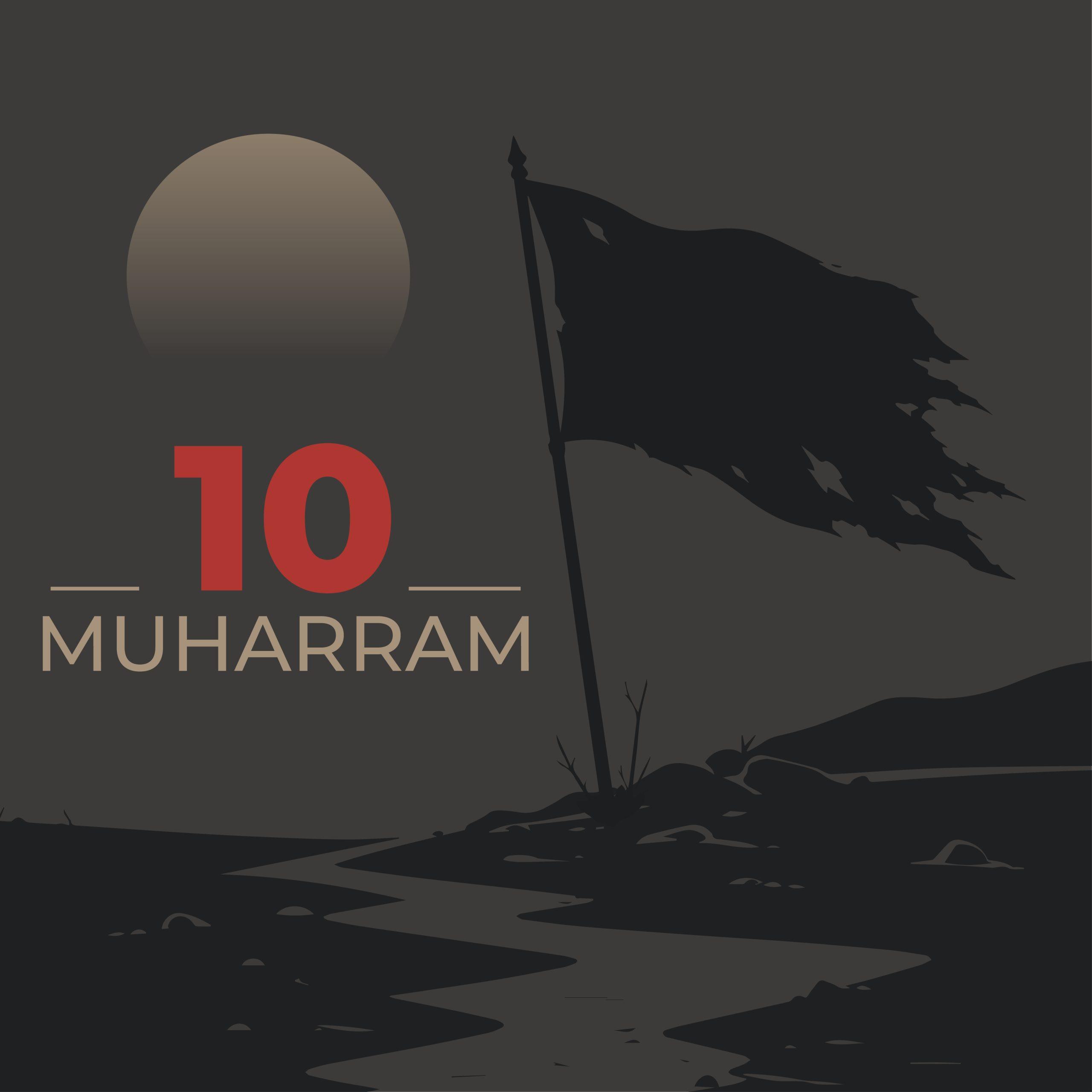
Every year, when the month of Muharram arrives, Muslims around the world remember one of the most painful events in Islamic history—the martyrdom of Imam Husayn ibn Ali (RA), the beloved grandson of Prophet Muhammad ﷺ. Unfortunately, many Muslims know only fragments of the story. Some hear emotional narratives, while others encounter politically charged or sectarian versions of events. As a result, confusion often overshadows authentic history.
The tragedy of Karbala is not merely a historical event; it is a lesson in faith, patience, courage, and sacrifice. To understand it properly, Muslims should return to authentic historical sources and the teachings of the Qur’an and Sunnah rather than relying on exaggerations, myths, or partisan accounts.
The Virtue of Muharram in Islam
Before discussing Karbala, it is important to understand the significance of Muharram itself. Muharram is one of the four sacred months mentioned in the Qur’an.
Allah says:
“Indeed, the number of months with Allah is twelve months in the register of Allah from the day He created the heavens and the earth; of these, four are sacred.” (Surah At-Tawbah 9:36)
The Prophet ﷺ also described Muharram as:
“The best fasting after Ramadan is the month of Allah, Muharram.” (Sahih Muslim)
This shows that Muharram was already a blessed and sacred month long before the events of Karbala took place.
The Special Significance of Ashura
The 10th day of Muharram, known as Ashura, held significance even during the lifetime of the Prophet ﷺ.
When the Prophet ﷺ arrived in Madinah, he found the Jews fasting on this day. They explained that it was the day Allah saved Prophet Musa (AS) and the Children of Israel from Pharaoh. The Prophet ﷺ said:
“We have more right to Musa than they do.”
He then fasted on that day and instructed the Muslims to fast as well. (Sahih al-Bukhari; Sahih Muslim)
Therefore, Ashura is an important day in Islam due to its connection with Prophet Musa (AS), in addition to the later events of Karbala.
The Historical Background After the Death of Mu’awiyah (RA)
To understand Karbala, we must look at the political circumstances of the time.
After the martyrdom of Caliph Ali ibn Abi Talib (RA), Mu’awiyah ibn Abi Sufyan (RA) became the ruler of the Muslim state. His rule brought relative stability after years of internal conflict.
When Mu’awiyah (RA) passed away in 60 AH, his son Yazid succeeded him. Some prominent Muslims accepted this succession, while others had reservations. Among those who did not immediately pledge allegiance was Imam Husayn ibn Ali (RA), the grandson of the Prophet ﷺ.
Imam Husayn (RA) was highly respected throughout the Muslim world. He was the son of Ali ibn Abi Talib (RA) and Fatimah (RA), the daughter of the Prophet ﷺ. The Prophet ﷺ loved him dearly and said:
“Husayn is from me, and I am from Husayn.” (Sunan al-Tirmidhi)
Because of his status and character, many people looked to him for leadership.
The Letters from Kufa
At that time, the city of Kufa in Iraq was politically significant. Many people there were dissatisfied with the existing leadership and sent numerous letters to Imam Husayn (RA), urging him to come to Kufa. They promised support and loyalty and encouraged him to take a leading role in addressing their grievances.
Imam Husayn (RA) did not immediately act upon these invitations. Instead, he sent his cousin, Muslim ibn Aqil (RA), to assess the situation and determine whether the support was genuine.
Initially, Muslim ibn Aqil reported strong support from the people of Kufa. Based on these reports, Imam Husayn (RA) decided to travel toward Iraq.
Advice Given to Imam Husayn (RA)
Before departing, several respected Muslims advised Imam Husayn (RA) to be cautious. They were concerned about the reliability of the people of Kufa due to their past political instability.
Among those reported to have expressed concerns were Abdullah ibn Abbas (RA) and Abdullah ibn Umar (RA). Their advice came from genuine concern and love for Imam Husayn (RA).
However, Imam Husayn (RA) believed that responding to the invitations and pursuing what he considered a just course of action was the correct decision. As with many matters of political judgment, sincere Muslims reached different conclusions.
The Situation Changes in Kufa
While Imam Husayn (RA) was traveling, the political situation in Kufa changed dramatically.
The governor Ubayd Allah ibn Ziyad took strong measures to suppress opposition. Many of those who had previously written letters of support became fearful. Tribal pressures, threats, and political realities caused many people to withdraw their support.
Muslim ibn Aqil (RA), who had been sent as Imam Husayn’s representative, found himself abandoned by many who had earlier pledged loyalty. Eventually, he was captured and killed.
By the time Imam Husayn (RA) received news of these developments, he was already on his journey.
The Events of Karbala
Imam Husayn (RA), accompanied by family members and a small group of supporters, eventually arrived in the area known as Karbala.
The forces sent by the authorities significantly outnumbered his group. Negotiations and discussions took place, and historical reports mention that Imam Husayn (RA) sought solutions that could avoid bloodshed.
However, tensions escalated, and on the 10th of Muharram in 61 AH, the tragic confrontation occurred.
Imam Husayn (RA), along with many of his family members and companions, was martyred. Among those killed were some of the most noble members of the Prophet’s family.
The tragedy shocked the Muslim world and left a lasting impact on Islamic history.
Did the Sahabah Betray Imam Husayn (RA)?
One of the common misconceptions surrounding Karbala is the claim that the Companions (Sahabah) betrayed Imam Husayn (RA).
This is not an accurate description of historical events.
Many senior Companions had already passed away by this time. Others had advised Imam Husayn (RA) against traveling to Kufa because they feared the people there would not remain loyal.
The betrayal commonly referred to in historical discussions relates primarily to many individuals in Kufa who had invited Imam Husayn (RA) through letters but later failed to support him when circumstances became difficult.
Therefore, it is neither accurate nor fair to blame the Sahabah collectively for the tragedy.
How Ahl al-Sunnah View the Tragedy of Karbala
Ahl al-Sunnah hold a balanced position regarding Karbala.
They love and honor Imam Husayn (RA) and regard him as one of the greatest figures in Islamic history. They consider his martyrdom a tremendous tragedy and a grave injustice.
At the same time, Sunni scholars caution against turning historical discussions into sources of hatred, division, or sectarian hostility. They encourage Muslims to learn lessons from history while maintaining fairness and avoiding exaggeration.
The focus should remain on truth, justice, and respect for all those whom Islam teaches us to honor.
Lessons Muslims Can Learn from Karbala
The tragedy of Karbala offers timeless lessons for every generation.
The first lesson is steadfastness upon principles. Imam Husayn (RA) demonstrated remarkable courage and sincerity in acting according to what he believed was right.
The second lesson is patience during hardship. Even in the face of immense suffering, he remained firm in faith and trust in Allah.
The third lesson is the danger of abandoning truth when it becomes difficult. Many people express support for noble causes when circumstances are easy, but true character is revealed during trials.
The fourth lesson is the importance of unity and avoiding divisions that weaken the Muslim community.
Finally, Karbala reminds us of the immense status of the family of the Prophet ﷺ and the obligation to love and respect them.
Conclusion
The tragedy of Karbala remains one of the most heartbreaking events in Islamic history. It was the martyrdom of Imam Husayn ibn Ali (RA), the beloved grandson of Prophet Muhammad ﷺ, and many of his family members and companions. While emotions naturally accompany this topic, Muslims should strive to understand it through authentic historical sources and balanced scholarship.
Muharram is not merely a month of historical remembrance; it is a month that teaches faith, sacrifice, patience, and devotion to Allah. The story of Karbala is not about keeping old wounds alive or fueling divisions among Muslims. Rather, it is about remembering the courage of Imam Husayn (RA), learning from his steadfastness, and drawing closer to Allah through reflection, worship, and adherence to the teachings of Islam.
May Allah be pleased with Imam Husayn (RA), his family, the Companions of the Prophet ﷺ, and all those who sincerely served Islam. Ameen.
Copyright 2023, All Rights Reserved
Leave Your Comments